Morton’s Neuroma: Symptoms, Causes, and When to See a Podiatrist
- posted: Apr. 26, 2025
If you’ve ever felt like there’s a pebble stuck in your shoe but there’s nothing there, you might be experiencing a condition called Morton’s neuroma. It’s a relatively common foot issue that can cause discomfort while walking or standing, particularly over time. With the right care, most people find relief from pain and irritation. Your podiatrists at Connecticut Foot Care Centers in Rocky Hill, Bristol, Middletown, Glastonbury, Newington, and Kensington, CT, can explain what Morton’s neuroma is and when it’s time to seek help.
Understanding Morton’s Neuroma
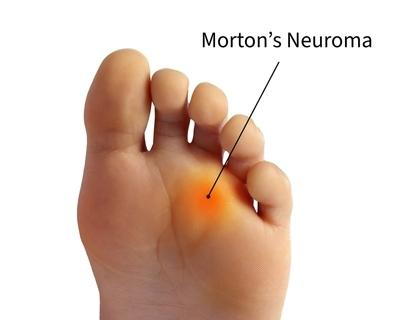
Morton’s neuroma is a thickening of the tissue around a nerve that runs between the bones of the toes, most often between the third and fourth toes. As the tissue thickens, it puts pressure on the nerve, which can cause pain, burning, tingling, or numbness in the ball of the foot or the toes. Although it’s not a tumor or true nerve growth, the irritation and inflammation can lead to chronic discomfort if left untreated.
Symptoms often develop gradually and may worsen with physical activity or wearing certain shoes. Common symptoms include:
- A sharp, burning pain in the ball of the foot
- Tingling or numbness in the toes
- A feeling of a pebble or fold in the sock on your foot
- Pain that worsens with tight shoes or high heels
You may notice that removing your shoes or gently rubbing the area provides temporary relief. However, as the condition progresses, the pain may become more constant.
Factors that can contribute to the development of this issue include wearing tight or narrow shoes, repetitive impact or pressure on the feet, foot structure issues, or trauma to the foot. Women are more likely than men to develop this condition, likely due to footwear choices and anatomical differences in the feet.
If foot pain is interfering with your daily activities, it’s a good idea to consult your podiatrist in Rocky Hill, Bristol, Middletown, Glastonbury, Newington, and Kensington, CT, about Morton’s neuroma. Early treatment can help prevent the condition from getting worse and may reduce the need for more invasive procedures later on. Common treatments include:
- Wearing supportive and roomy shoes
- Using custom orthotics
- Taking anti-inflammatory medications
- Physical therapy
If symptoms don’t improve, your podiatrist may suggest corticosteroid injections or, in rare cases, surgery to remove the affected nerve tissue.
Contact Our Podiatrist Today
Find out how to deal with Morton’s neuroma. Contact your podiatrists at Connecticut Foot Care Centers in Rocky Hill, Bristol, Middletown, Glastonbury, Newington, and Kensington, CT, to learn more about Morton’s neuroma and how to manage your symptoms. Call for more information and to schedule your appointment today at (860) 563-1200 for Rocky Hill, CT, (860) 666-2078 for Newington, CT, (860) 346-5226 for Middletown, CT, (860) 633-6749 for Glastonbury, CT, (860) 582-0747 for Bristol, CT, and (860) 828-9455 for Kensington, CT.
- posted: Apr. 26, 2025
If you’ve ever felt like there’s a pebble stuck in your shoe but there’s nothing there, you might be experiencing a condition called Morton’s neuroma. It’s a relatively common foot issue that can cause discomfort while walking or standing, particularly over time. With the right care, most people find relief from pain and irritation. Your podiatrists at Connecticut Foot Care Centers in Rocky Hill, Bristol, Middletown, Glastonbury, Newington, and Kensington, CT, can explain what Morton’s neuroma is and when it’s time to seek help.
Understanding Morton’s Neuroma
Morton’s neuroma is a thickening of the tissue around a nerve that runs between the bones of the toes, most often between the third and fourth toes. As the tissue thickens, it puts pressure on the nerve, which can cause pain, burning, tingling, or numbness in the ball of the foot or the toes. Although it’s not a tumor or true nerve growth, the irritation and inflammation can lead to chronic discomfort if left untreated.
Symptoms often develop gradually and may worsen with physical activity or wearing certain shoes. Common symptoms include:
- A sharp, burning pain in the ball of the foot
- Tingling or numbness in the toes
- A feeling of a pebble or fold in the sock on your foot
- Pain that worsens with tight shoes or high heels
You may notice that removing your shoes or gently rubbing the area provides temporary relief. However, as the condition progresses, the pain may become more constant.
Factors that can contribute to the development of this issue include wearing tight or narrow shoes, repetitive impact or pressure on the feet, foot structure issues, or trauma to the foot. Women are more likely than men to develop this condition, likely due to footwear choices and anatomical differences in the feet.
If foot pain is interfering with your daily activities, it’s a good idea to consult your podiatrist in Rocky Hill, Bristol, Middletown, Glastonbury, Newington, and Kensington, CT, about Morton’s neuroma. Early treatment can help prevent the condition from getting worse and may reduce the need for more invasive procedures later on. Common treatments include:
- Wearing supportive and roomy shoes
- Using custom orthotics
- Taking anti-inflammatory medications
- Physical therapy
If symptoms don’t improve, your podiatrist may suggest corticosteroid injections or, in rare cases, surgery to remove the affected nerve tissue.
Contact Our Podiatrist Today
Find out how to deal with Morton’s neuroma. Contact your podiatrists at Connecticut Foot Care Centers in Rocky Hill, Bristol, Middletown, Glastonbury, Newington, and Kensington, CT, to learn more about Morton’s neuroma and how to manage your symptoms. Call for more information and to schedule your appointment today at (860) 563-1200 for Rocky Hill, CT, (860) 666-2078 for Newington, CT, (860) 346-5226 for Middletown, CT, (860) 633-6749 for Glastonbury, CT, (860) 582-0747 for Bristol, CT, and (860) 828-9455 for Kensington, CT.
Appointment Request
Taking Steps Towards Healthy Feet, Every Step of the Way!
Contact Us
