What Causes Hammertoes and When Should You Seek Treatment?
- posted: Apr. 24, 2025
Many patients who struggle with the condition wait too long before consulting a podiatrist, not realizing that early care can make a big difference. Understanding what causes hammertoes and when to seek treatment can help you avoid long-term discomfort and complications. Contact your local experts from the Connecticut Foot Care Centers in Rocky Hill, Bristol, Middletown, Glastonbury, Newington, and Kensington, CT.
Hammertoes
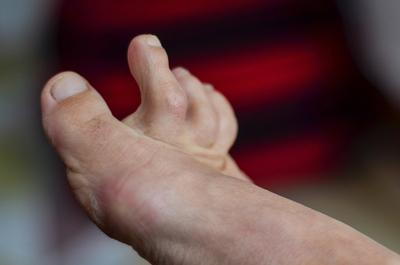
Hammertoes develop when the muscles and tendons that control toe movement become imbalanced, leading to abnormal bending of the toe joints. This often begins subtly, with tightness or difficulty straightening the toe. Over time, the toe may remain bent even when barefoot or at rest.
Causes, Risks, and Prevention
Hammertoes can result from years of wearing ill-fitting shoes, particularly those with narrow-toe boxes or high heels that force the toes into unnatural positions. Genetics also plays a role; you may be more susceptible if your family has a history of toe deformities. Medical conditions such as diabetes, arthritis, or previous foot injuries can further increase your risk.
To reduce the chance of developing hammertoes, consider choosing footwear that provides adequate toe room and arch support. Stretching exercises and foot-strengthening routines may help keep the muscles balanced. If you start to notice changes in toe shape or flexibility, it's important not to ignore them; early intervention can prevent the need for surgical correction.
How a Podiatrist Can Help
A skilled podiatrist will begin with a thorough examination, often including X-rays, to determine the severity of your hammertoes and identify contributing factors. In mild to moderate cases, conservative treatment options like custom orthotics, toe splints, and shoe modifications can provide significant relief. In more advanced cases, surgical intervention may be the best option to restore proper alignment and function.
Hammertoes Treatment in Rocky Hill, Bristol, Middletown, Glastonbury, Newington, and Kensington, CT
Hammertoes may seem minor initially, but they can escalate quickly without the right care. If you're experiencing symptoms of hammertoes, you can schedule a consultation with the experts from the Connecticut Foot Care Centers by dialing (860) 563-1200 for the Rocky Hill, CT, office, (860) 582-0747 for Bristol, CT, (860) 346-5226 for Middletown, CT, (860) 633-6749 for Glastonbury, CT, (860) 666-2078 for Newington, CT, and (860) 828-9455 for Kensington, CT.
- posted: Apr. 24, 2025
Many patients who struggle with the condition wait too long before consulting a podiatrist, not realizing that early care can make a big difference. Understanding what causes hammertoes and when to seek treatment can help you avoid long-term discomfort and complications. Contact your local experts from the Connecticut Foot Care Centers in Rocky Hill, Bristol, Middletown, Glastonbury, Newington, and Kensington, CT.
Hammertoes
Hammertoes develop when the muscles and tendons that control toe movement become imbalanced, leading to abnormal bending of the toe joints. This often begins subtly, with tightness or difficulty straightening the toe. Over time, the toe may remain bent even when barefoot or at rest.
Causes, Risks, and Prevention
Hammertoes can result from years of wearing ill-fitting shoes, particularly those with narrow-toe boxes or high heels that force the toes into unnatural positions. Genetics also plays a role; you may be more susceptible if your family has a history of toe deformities. Medical conditions such as diabetes, arthritis, or previous foot injuries can further increase your risk.
To reduce the chance of developing hammertoes, consider choosing footwear that provides adequate toe room and arch support. Stretching exercises and foot-strengthening routines may help keep the muscles balanced. If you start to notice changes in toe shape or flexibility, it's important not to ignore them; early intervention can prevent the need for surgical correction.
How a Podiatrist Can Help
A skilled podiatrist will begin with a thorough examination, often including X-rays, to determine the severity of your hammertoes and identify contributing factors. In mild to moderate cases, conservative treatment options like custom orthotics, toe splints, and shoe modifications can provide significant relief. In more advanced cases, surgical intervention may be the best option to restore proper alignment and function.
Hammertoes Treatment in Rocky Hill, Bristol, Middletown, Glastonbury, Newington, and Kensington, CT
Hammertoes may seem minor initially, but they can escalate quickly without the right care. If you're experiencing symptoms of hammertoes, you can schedule a consultation with the experts from the Connecticut Foot Care Centers by dialing (860) 563-1200 for the Rocky Hill, CT, office, (860) 582-0747 for Bristol, CT, (860) 346-5226 for Middletown, CT, (860) 633-6749 for Glastonbury, CT, (860) 666-2078 for Newington, CT, and (860) 828-9455 for Kensington, CT.
Appointment Request
Taking Steps Towards Healthy Feet, Every Step of the Way!
Contact Us
